
Using trekking poles to reduce knee strain
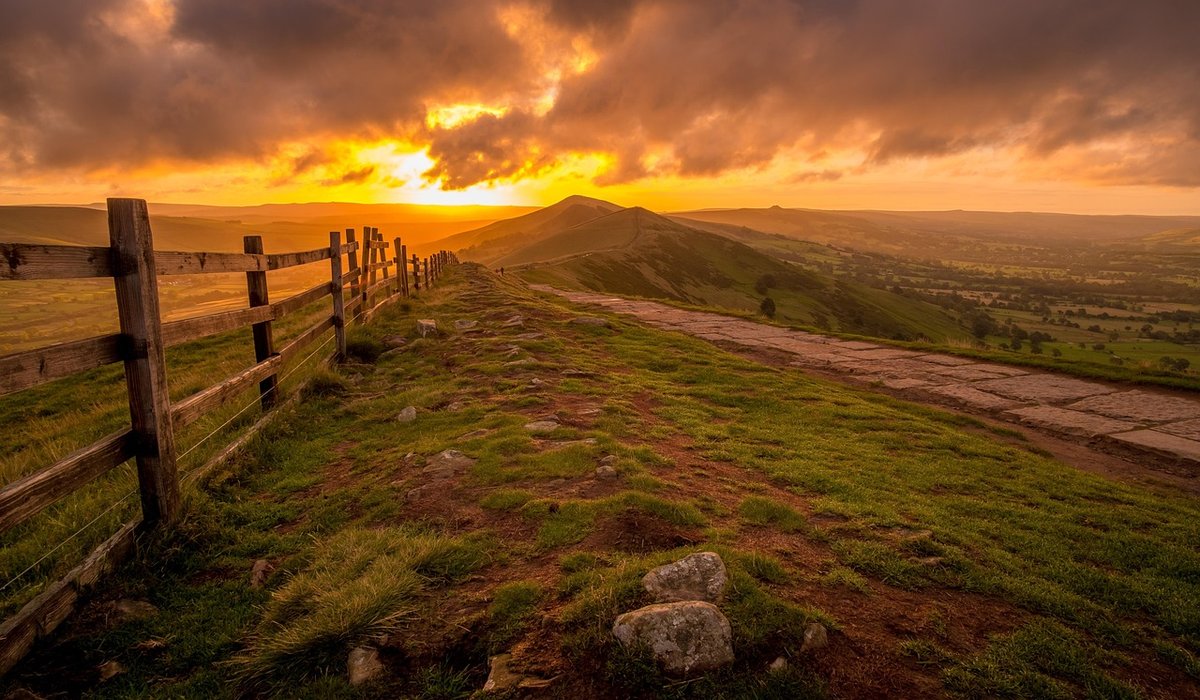
Why the mist is worth the alarm clock
There is a particular kind of morning on the fells that rewards the sort of person willing to leave a warm sleeping bag at 4am. You climb through grey gloom, boots sodden with dew, and somewhere above the cloud line the world opens into blue sky and islands of rock. Below you, valleys lie under a slow sea of white. It is the most photogenic condition our uplands offer, and it is gone within an hour.
Mist forms when the air cools to its dew point overnight, and the ingredients are fairly predictable. You want a clear, calm night after a day of rain, with high pressure and light winds. Valley bottoms lose heat fastest, so cold air drains downhill and pools in the hollows, filling tarns and ghylls while the summits stand clear. Autumn and early winter give the best chances, though late spring mornings after a wet spell can be superb. Check the wind speed as carefully as the cloud forecast: anything above about 15mph will shred the mist, while under 5mph and you have a genuine prospect of an inversion.
Get there before the light
Aim to be in position at least 40 minutes before sunrise. The blue hour, that soft window before the sun clears the horizon, is when mist glows most beautifully, and you want to be set up rather than still puffing up a steep pitch in the dark. Conditions change minute by minute, so work quickly and revisit the same composition as the light shifts.
- Take a tripod. Even a lightweight one. Low light means shutter speeds from half a second to several seconds, and handheld shots in mist are usually soft.
- Carry spare batteries in an inside pocket. Cold drains them faster than you expect.
- Pack two cloths. Mist condenses on front elements constantly; a microfibre in a zip pocket saves the shot.
- Bring a graduated filter and, if you have one, a polariser. The polariser deepens colour in wet rock and foliage, though use it sparingly when shooting into the sun.
- Wear proper boots and gaiters. Long wet grass will soak through trousers in minutes, and cold legs end photography sessions early.
Exposing for a landscape that is mostly white
Bright mist fools a camera's meter. Left to its own devices, it will try to render that luminous white as mid grey, and your images come out dull and murky. Push exposure compensation up by one third to a full stop and check the histogram: you want the highlights sitting close to the right-hand edge without blocking up. Shoot raw so you have room to bring the tones back later.
Focus is the other challenge. Low contrast defeats autofocus, so switch to manual and use magnified live view on a ridge edge, a wall or a fence line. An aperture between f/8 and f/13 gives a generous depth of field without softening the frame through diffraction, and ISO 100 keeps noise away. Where foreground rocks and a distant ridge both need to be sharp, either focus roughly a third of the way into the scene or take two frames and blend them. If the sun breaks through and the contrast range explodes, bracket your exposures and sort it out at home.
Composing with less: layers, ridges and negative space
Mist is the finest tidier a landscape photographer could ask for. Car parks, pylons, sheep folds and the general clutter of a working valley simply disappear, and what remains is shape and tone. Look for receding ridges, each one paler and softer than the last. A short telephoto, somewhere between 70mm and 200mm, will compress those layers into a graphic stack that a wide lens cannot manage. Save the wide-angle for occasions when you have a strong foreground: a drystone wall running into the mist, a lone hawthorn, the edge of a tarn, a beck sliding between rocks.
Resist the urge to fill every corner. Mist thrives on emptiness, and a single dark ridge against a field of white is often the strongest frame of the morning. Shoot into the light when you can, because backlighting picks out rim light on grasses and heather and produces visible sunbeams as the sun climbs. Finally, do not pack up as the mist begins to lift. The ten minutes after it starts to break, when trees and crags emerge in stages, are frequently the best of the day.
Small things: dew, frost and fine texture
When the grand view has gone flat, drop your eyes. Misty mornings are made for close work: beaded dew on spider webs, hoarfrost furring a wire fence, water droplets along a blade of grass, lichen glowing on a boulder. Get low, use your tripod, and stop down to around f/8 for a balance of sharpness and separation. Backlight these subjects wherever possible so the droplets sparkle rather than sit as dull grey specks. A cheap folding diffuser is useful too, softening harsh light on delicate subjects without flattening them entirely.
Looking after yourself and the ground beneath you
Photography is a fine excuse for a dawn start, but it must never override good judgement. Mist in the valleys often means cloud on the tops, so carry a map and compass, know your escape routes, and tell someone where you are going and when you expect to be back. Keep to paths, particularly on fragile peat and eroded fellside, and never trample a fragile moss or lichen community for the sake of a foreground. Close gates, give livestock plenty of room, and take every scrap of litter home.
One last piece of housekeeping: a cold camera brought into a warm kitchen will fog instantly. Leave your kit in its bag and let it reach room temperature slowly. Then get the kettle on, review the morning's frames, and start planning the next clear, still night.
LEAVE A COMMENT